A campaign for Chicago's makers · 2026

A city that trains creatives shouldn't lose them.

Project 808 is a creative manufacturing studio for Chicago's next generation of makers — bridging institutional access and independent production for the talent this city raises.

Built for Chicago, by a Chicagoan

Build it with us
Chicago, IL Phase 01 · 2026

Chicago is losing the creatives it raises.

FIG. 01
32%

More college-educated Chicagoans are leaving the city than moving in — the 4th worst brain drain in the nation.

U.S. Census 2025
FIG. 02
78%

Of Illinois arts graduates work outside their creative field after graduation. Not from lack of talent — from lack of infrastructure.

SNAAP Report
FIG. 03
$10K+

The cost of a single CNC machine before upkeep. Professional production equipment is completely out of reach for new graduates.

Industry pricing, 2025
FIG. 04
35%

Average tariff rate on US apparel imports as of late 2025 — up from 14.7% a year earlier. Overseas production is no longer the affordable default for emerging designers.

Sheng Lu, Univ. of Delaware
Why now

Tariffs on apparel imports have more than doubled in a single year. Designers who used to send small-batch production to China, Vietnam, or Bangladesh are now facing duties of 40–60% on every piece — pricing out the freelance and emerging tier of the industry. The U.S. imports 89% of its apparel. Project 808 puts production capacity exactly where it's now most needed: domestic, accessible, and built around the people who used to outsource because it was cheaper.

Chicago trains world-class creative talent — then takes away their tools the moment they graduate.

i.

Access lost at graduation

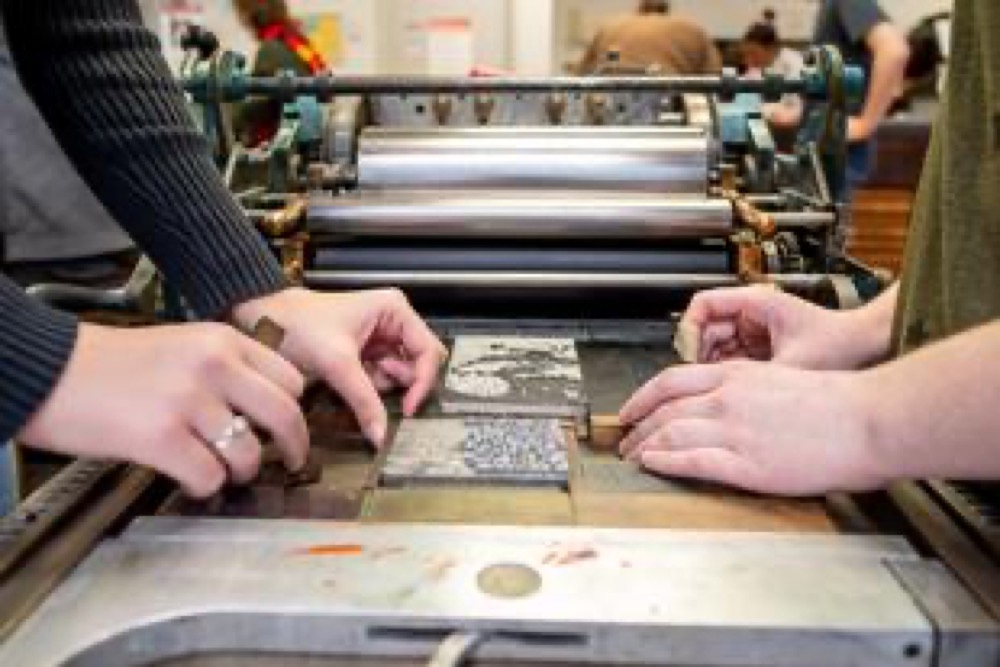
Students at SAIC, Columbia College, DePaul, and others use large-format printers, laser cutters, CNC machines, and water jets throughout their education. The day they graduate, that access disappears.

ii.

Equipment out of reach

A professional CNC machine costs $10,000+ before upkeep. A full studio setup pushes well past $50,000. Independent ownership is not realistic for a new graduate working an entry-level creative job.

iii.

No infrastructure to fill it

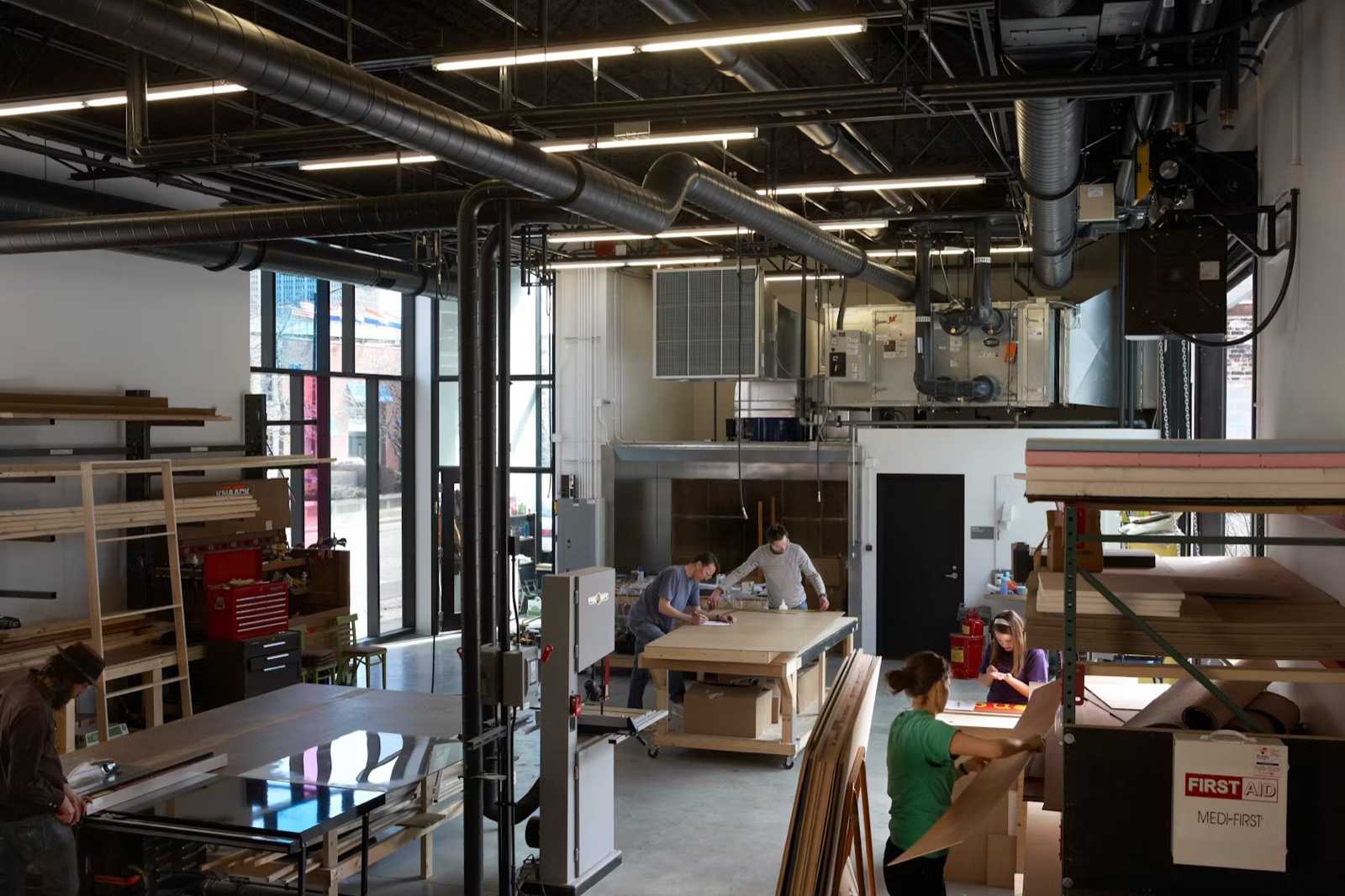
Chicago has no dedicated creative manufacturing studio bridging institutional access and independent production. The resources exist inside schools and corporations — nowhere in between.

Introducing

A place where an idea doesn't just live in someone's head — but actually gets made.

Chicago has no shortage of creative talent. What it's missing is a dedicated space where that talent can actually make things.
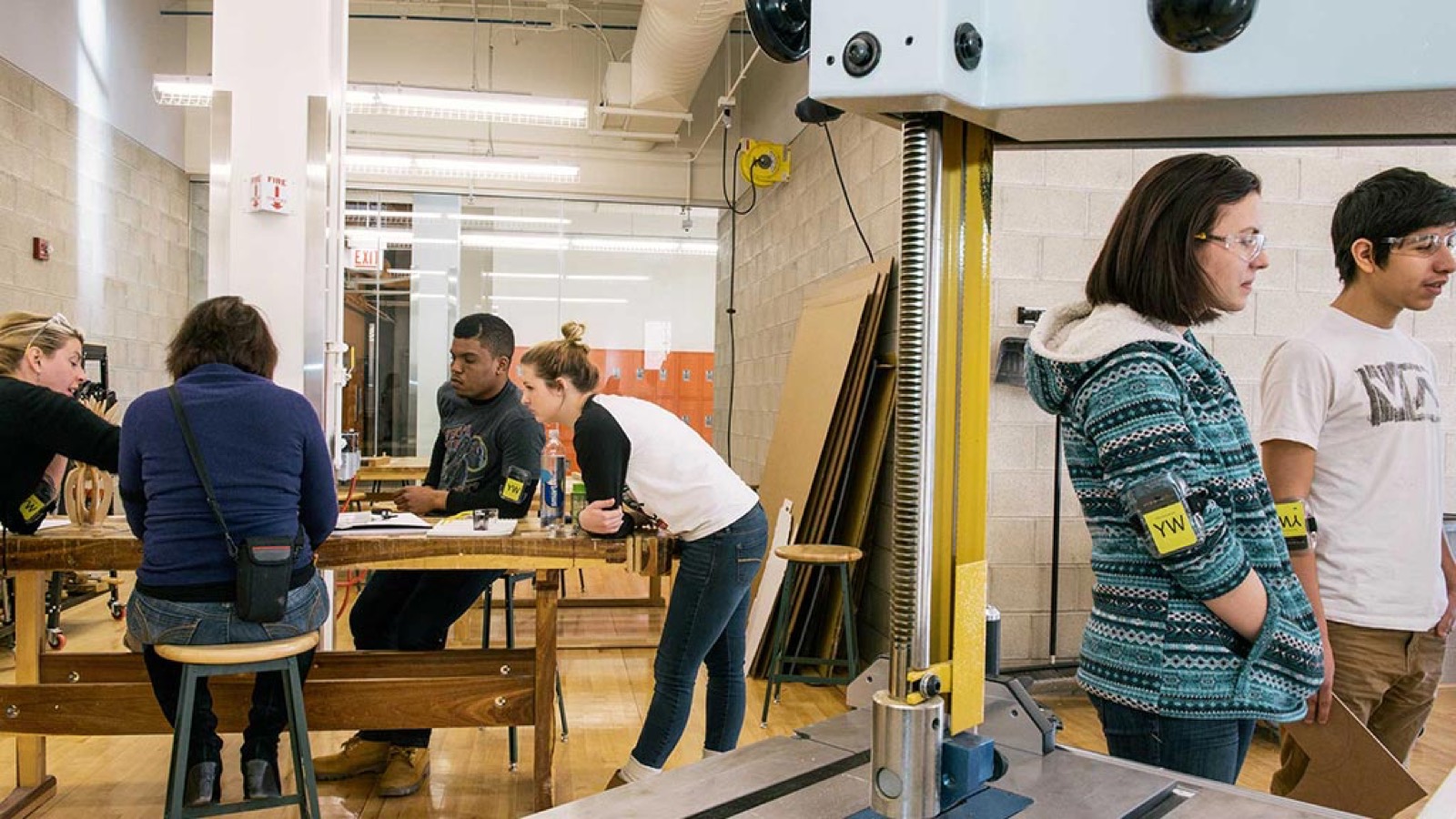
The two-layer model.

01 Layer One

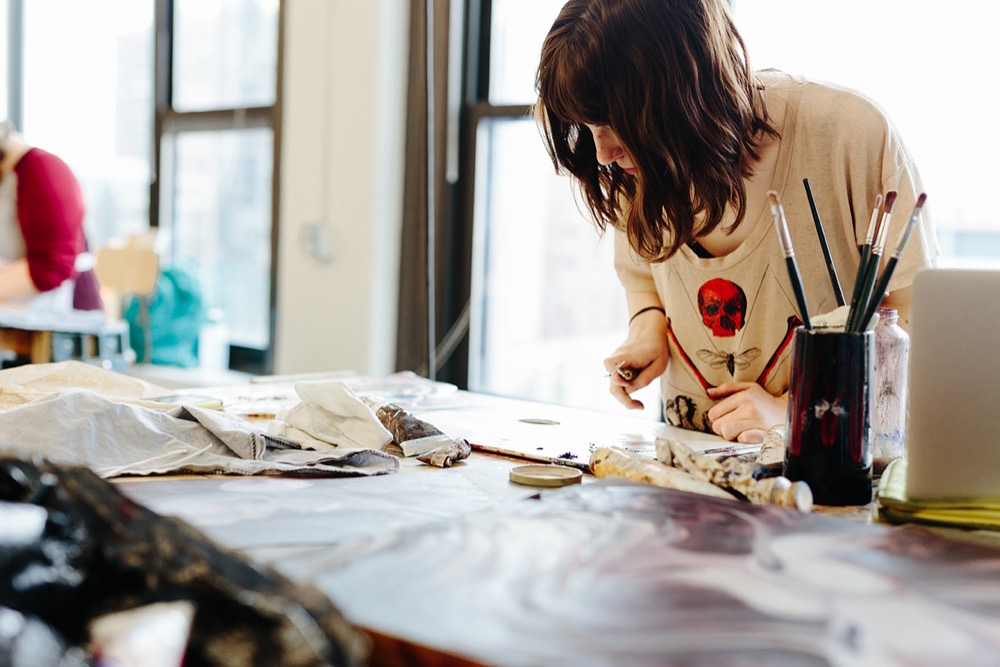
Bring your idea.

Have a concept but don't know the machines? Work directly with our in-house artisans and skilled makers to bring your idea to life — from prototype to finished product.
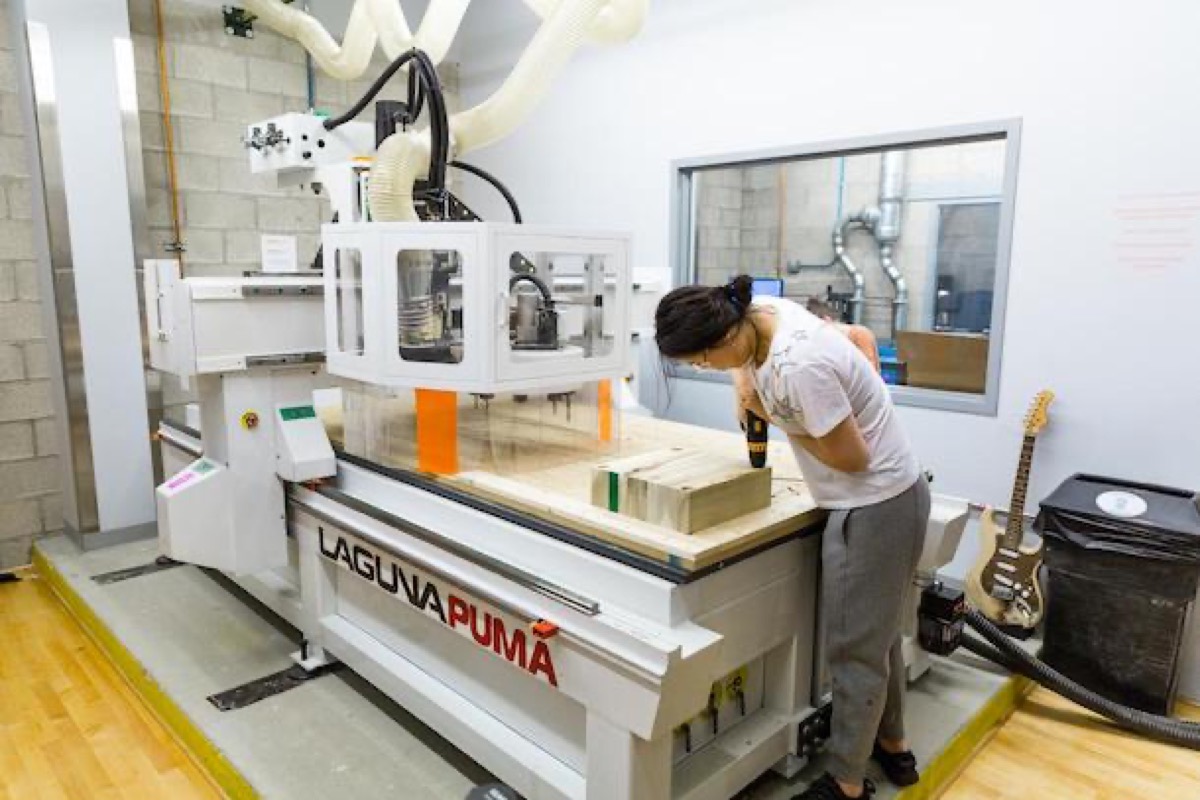
For entrepreneurs, students, designers, and community members with a vision.
02 Layer Two

Rent the machines.

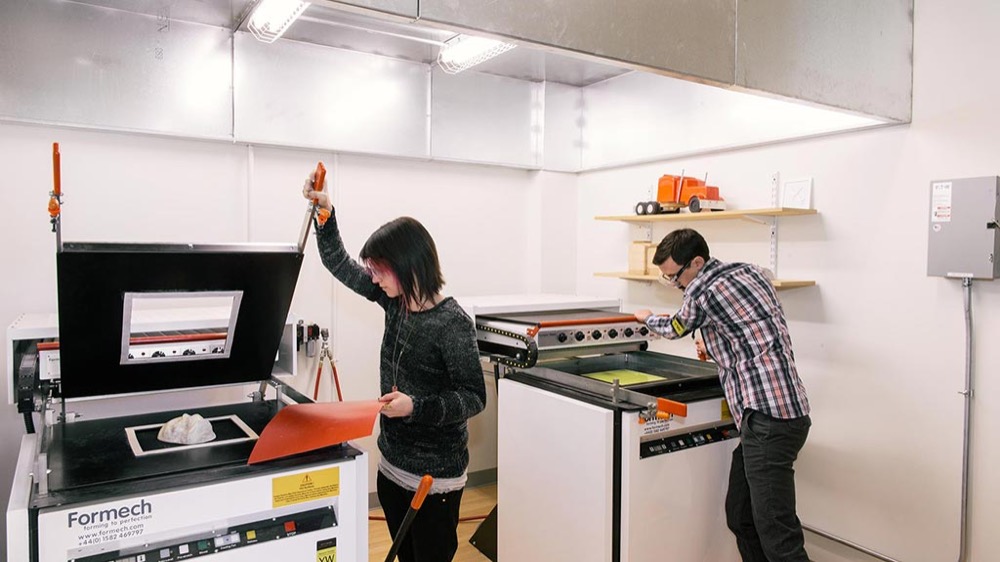
Already know how to create? Book time on professional equipment — large-format printers, laser cutters, CNC machines, water jets — at accessible rates.

For trained creatives, freelancers, small businesses, and artists ready to produce at scale.

Production-grade equipment, accessible rates.

Click any machine to see what you can build with it

Built through industry partnerships, not retail markups.

A $50,000 studio buildout is unrealistic for any new graduate — and unnecessary. Project 808's funding model is built around partnerships with the manufacturers behind these tools: equipment donations, co-branded studio installations, and material sponsorships in exchange for visibility, training programs, and brand activation inside Chicago's creative community. These are the relationships we plan to build as Phase 01 funding comes together.

Tier 01

Equipment donation.

Brands could donate machines in exchange for permanent on-floor placement, signage, and inclusion in every workshop, photoshoot, and press feature for the lifetime of the equipment.

  • Permanent branded plaque on machine
  • Featured in all studio content
  • Tax-deductible contribution
  • First right of refusal on upgrades
Tier 03

Material & supply sponsorship.

Material brands could provide consumables — fabric, ink, filament, vinyl, thread, blanks — at sponsored rates or as in-kind donations, keeping member project costs accessible.

  • Material-branded supply station
  • Member-discount pricing
  • Co-hosted material education events
  • Inclusion in member starter kits
Brands we're hoping to build with
Sewing & Fashion
Brother
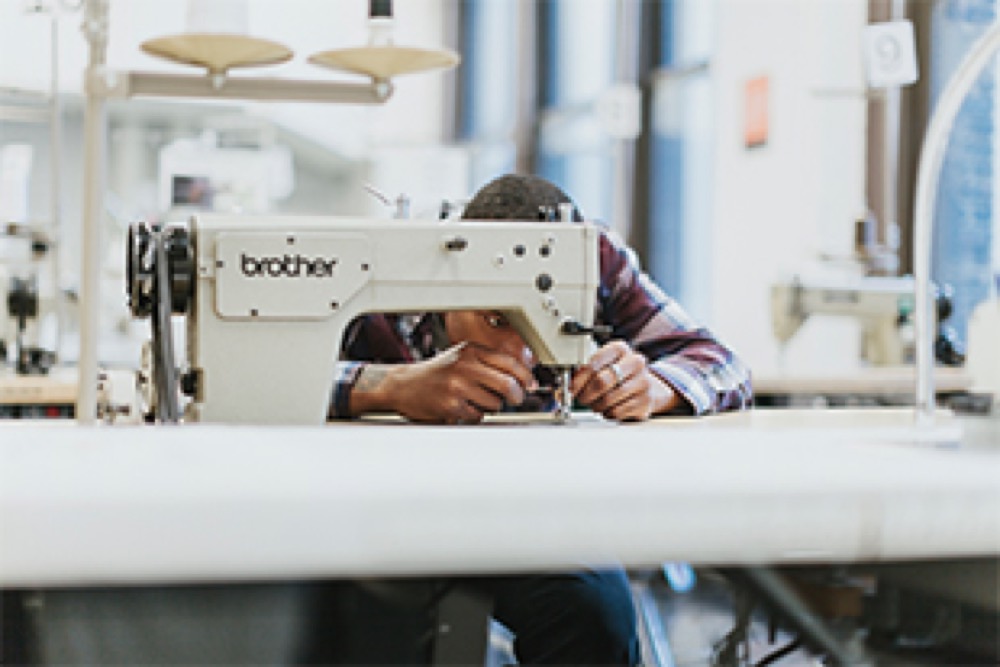
Industrial sewing, sergers, embroidery
Sewing & Fashion
Juki
Heavy-duty industrial machines
Sewing & Fashion
Bernina
Sewing & embroidery education
Cutting
Glowforge
Laser cutting & engraving
Cutting
Cricut & Roland
Vinyl cutters & plotters
Printing
Epson & Canon
Large-format & sublimation printers
3D & CNC
Prusa & Bambu Lab
FDM & resin 3D printing
3D & CNC
Shaper & ShopBot
CNC machines & routers
Materials
Mood Fabrics
Apparel fabric & trim supply
Materials
Bella+Canvas
Blank apparel & sublimation goods
Press
Stahls'
Heat presses & HTV supply
Tools
Festool & DeWalt
Hand tools & workbench equipment
Represent a brand on this list — or one that should be? When the time is right, we'd love to start the conversation.
Introduce yourself →

Other cities already built what Chicago hasn't.

New York and Los Angeles have spent the last decade investing in publicly accessible creative manufacturing infrastructure — funded by city economic development agencies and public library systems, integrated with workforce development, and explicitly designed to retain the creative talent those cities train. Chicago has world-class creative schools and zero public infrastructure to receive their graduates.
City What's available
New York Funded by NYCEDC · 11 fabrication studios citywide
Los Angeles Public library system · Free for cardholders
Chicago — No equivalent facility —
Flagship facility
Futureworks Makerspace 15,000 sq ft · Brooklyn Army Terminal Opened 2019 · NYC partnership
Octavia Lab Inside LA Public Library Central Free with library card · Downtown LA
— None — No publicly funded creative manufacturing studio exists in the city.
Network
Futureworks Shops 11-studio fabrication network across all 5 boroughs Coworking + equipment access
Maker City LA 60,000 sq ft · Downtown LA Apparel + entertainment industry focus
— None — Resources exist inside schools and corporate offices, with no public bridge.
Fashion infrastructure
Garment District + FMI Grants Fashion Manufacturing Initiative · Matching grant fund CFDA Production Directory · 6,500+ businesses
Renaissance Creative Studio DTLA · Pattern, sample, small-batch production Octavia Lab: sewing, sergers, embroidery, heat press
— None — Chicago designers send work to LA, NYC, or overseas to access these tools.
Tariff-era readiness
Positioned to absorb demand Garment District + Brooklyn manufacturing already scaling for the tariff-driven shift to domestic production.
Positioned to absorb demand DTLA fashion manufacturing district + small-batch studios already serving designers reshoring from overseas.
— Caught flat-footed — With tariffs on Chinese apparel at 41–61%, Chicago designers can no longer afford overseas production but have no domestic alternative in their own city.
Public equipment access
Yes CNC, laser, 3D print, sewing, prototyping Membership-based at affordable rates
Yes Laser, CNC mill, large-format print, vinyl, 3D print, sewing, sergers, embroidery, heat press
— Hobbyist scale only — Chicago Public Library has small consumer-grade equipment (Cricut machines, desktop 3D printers, hobby sewing) — useful for personal projects, but not built for the production volume, materials, or finish quality professional creatives need to run a business.
City backing
NYC EDC funded $73M projected economic impact at Brooklyn site alone
LA Public Library + LACI Civic + workforce-development funded
The opportunity. Project 808 is the proposal to close the gap.
Side-by-side · Scroll to compare
01 · Flagship Facility Where designers go to make.
New York
Futureworks Makerspace 15,000 sq ft · Brooklyn Army Terminal Opened 2019 · NYC partnership
Los Angeles
Octavia Lab Inside LA Public Library Central Free with library card · Downtown LA
Chicago
— None — No publicly funded creative manufacturing studio exists in the city.
02 · Citywide Network How wide the access reaches.
New York
Futureworks Shops 11-studio fabrication network across all 5 boroughs Coworking + equipment access
Los Angeles
Maker City LA 60,000 sq ft · Downtown LA Apparel + entertainment industry focus
Chicago
— None — Resources exist inside schools and corporate offices, with no public bridge.
03 · Fashion Infrastructure Industry-grade support for designers.
New York
Garment District + FMI Grants Fashion Manufacturing Initiative · matching grant fund CFDA Production Directory · 6,500+ businesses
Los Angeles
Renaissance Creative Studio DTLA · Pattern, sample, small-batch production Octavia Lab: sewing, sergers, embroidery, heat press
Chicago
— None — Chicago designers send work to LA, NYC, or overseas to access these tools.
04 · Tariff-era Readiness Built for the moment we're in.
New York
Positioned to absorb demand Garment District + Brooklyn manufacturing already scaling for the tariff-driven shift to domestic production.
Los Angeles
Positioned to absorb demand DTLA fashion manufacturing district + small-batch studios already serving designers reshoring from overseas.
Chicago
— Caught flat-footed — With tariffs on Chinese apparel at 41–61%, Chicago designers can no longer afford overseas production but have no domestic alternative in their own city.
05 · Public Equipment Access Production-grade tools for the public.
New York
Yes CNC, laser, 3D print, sewing, prototyping — membership-based at affordable rates.
Los Angeles
Yes Laser, CNC mill, large-format print, vinyl, 3D print, sewing, sergers, embroidery, heat press.
Chicago
— Hobbyist scale only — Chicago Public Library has small consumer-grade equipment (Cricut, desktop 3D printers, hobby sewing) — useful for personal projects, but not built for the production volume, materials, or finish quality professional creatives need.
06 · City Backing Who's funding the infrastructure.
New York
NYC EDC funded $73M projected economic impact at Brooklyn site alone.
Los Angeles
LA Public Library + LACI Civic + workforce-development funded.
Chicago
The opportunity. Project 808 is the proposal to close the gap.
Chicago has every reason to lead the Midwest in creative manufacturing — and no reason to keep losing the talent that builds it.
✦ The case for Project 808
Take the survey · 2 minutes

Are you a Chicago creative? Your voice strengthens the case.

We're collecting community input to demonstrate demand for Project 808 to city officials, investors, and decision-makers. Whether you're a current student, recent grad, freelancer, or founder — your response helps prove this infrastructure is needed. Confidential, brief, and built for builders.

Share your perspective →

What Chicago gains when we build it.

1,000+

Creatives served annually

From first-time makers to professional studios, Project 808 becomes a production hub embedded in Chicago's creative economy.

3–5%

Creative job growth in IL

Project 808 positions Chicago to capture that growth by giving creatives the infrastructure to stay, freelance, and build here.

32%

Brain drain to reverse

Every creative who builds roots at Project 808 is one more reason Chicago's talent stays home instead of leaving.

Community ripple effect

Local suppliers, collaborators, neighboring businesses, and institutions all benefit when a creative hub anchors a neighborhood.

What we need to break ground.

01

Funding

A grant, investment, or funding pathway in the range of $250K to $750K to launch Phase 1 — covering facility, equipment, operations, and community launch.

02

City partnership

A formal collaboration connecting Project 808 to existing creative economy programs, historic property initiatives, and workforce development funding.

03

Institutional bridge

Agreements with local colleges to extend student access post-graduation through Project 808 — solving the gap directly at scale.

04

Community advocates

Chicagoans who believe this city deserves the infrastructure to keep its makers here. Sign on, share the work, and help us build the case.

I am not pitching an idea from the outside. I am the person this gap was built for.

CT
Charlesa Thompson
Founder · UX/UI Designer · Creative Director
Designer & creative director Columbia College Chicago graduate. Co-founder and lead designer of Braid, a textured hair care education app.
Award-winning spatial work Creator of Where We Rest, a sculptural installation that earned the Lost Design South Side Sanctuary Award — hosted by the Chicago Architecture Center.
Skin in the game Properties scouted. Budget built. Business model structured. Project 808 is not hypothetical — it is in motion.
A Chicagoan building for Chicago I grew up experiencing the same gap I am solving. Project 808 is my commitment to the next generation of makers.

Build this with us.

For everyone

Stay close to the work.

Updates on the build, the space, and how Chicago can help us cross the finish line. No spam — just the milestones.

✦ ✦ ✦ ✦You're on the list. We'll be in touch.
For partners & funders

Help us break ground.

Funders, city representatives, institutional partners, equipment sponsors, and corporate collaborators — tell us how you'd like to be part of building this.

✦ ✦ ✦ ✦Thank you. We'll be in touch within a week.

Chicago Creative Infrastructure — 2026

We need to know
you exist.

Two minutes of your time becomes the data a city needs to invest in its own people. Fill this out honestly — your experience is the proof of concept.

808 · Chicago

Q01
What is your name?
Q02
What is your email address?
We'll only use this to keep you updated on 808's progress.
Q03
Which best describes where you are right now?
Please fill in what "Other" means to you.
Q04
What field are you working in or studying?
Select all that apply.
Please fill in what "Other" means to you.
Q05
Have you lost access to fabrication or production equipment after leaving a school or institution?
Q06
What equipment have you lost access to or can't find in Chicago?
Select all that apply.
Please fill in what "Other" means to you.
Q07
Have tariffs or overseas manufacturing costs blocked you from producing or testing a product idea?
Q08
Briefly describe what you were trying to build — and what stopped you.
This is the most important question on this form. Be specific. Your story is the proof.

Q09
If a professional creative manufacturing studio existed in Chicago today, how often would you use it?
Q10
What would you reasonably pay per month for access to this space and its equipment?
Q11
Would you pay a one-time fee to bring an idea and leave with a working prototype the same day?
Q12
On a scale of 1–10, how urgent is this need for you personally right now?
Not urgent Critical

Q13
Do you believe the City of Chicago has a responsibility to fund creative manufacturing infrastructure for its residents?
Q14
Where in Chicago would this space be most impactful?
Q15
Is there anything else you want decision-makers to know about why this space needs to exist?
Your words may be quoted directly in our pitch to the city. Be honest. Be bold.

Your response is confidential and will only be used to demonstrate community demand
for 808 to city officials, investors, and decision-makers.

✦ ✦ ✦ ✦

Your answers have been recorded.

A copy has been sent to
We'll keep you updated as 808 moves forward.

Optional. Standard messaging rates apply.